
Skip to content
Dresscode

A reference service for occasion dress · not a styling service

What not to
get wrong

The invitation says smart casual. Nobody agrees what that means, and asking the host is worse than guessing.

Dresscode does not tell you how to look. It tells you the floor, the ceiling, and the things that have no place there — with the reason for each, and an honest list of what is still disputed.

Paste it exactly · add the time, the place and who you are

Try
  • No styling advice
  • No comment on bodies
  • No pretence that the rules are the same everywhere
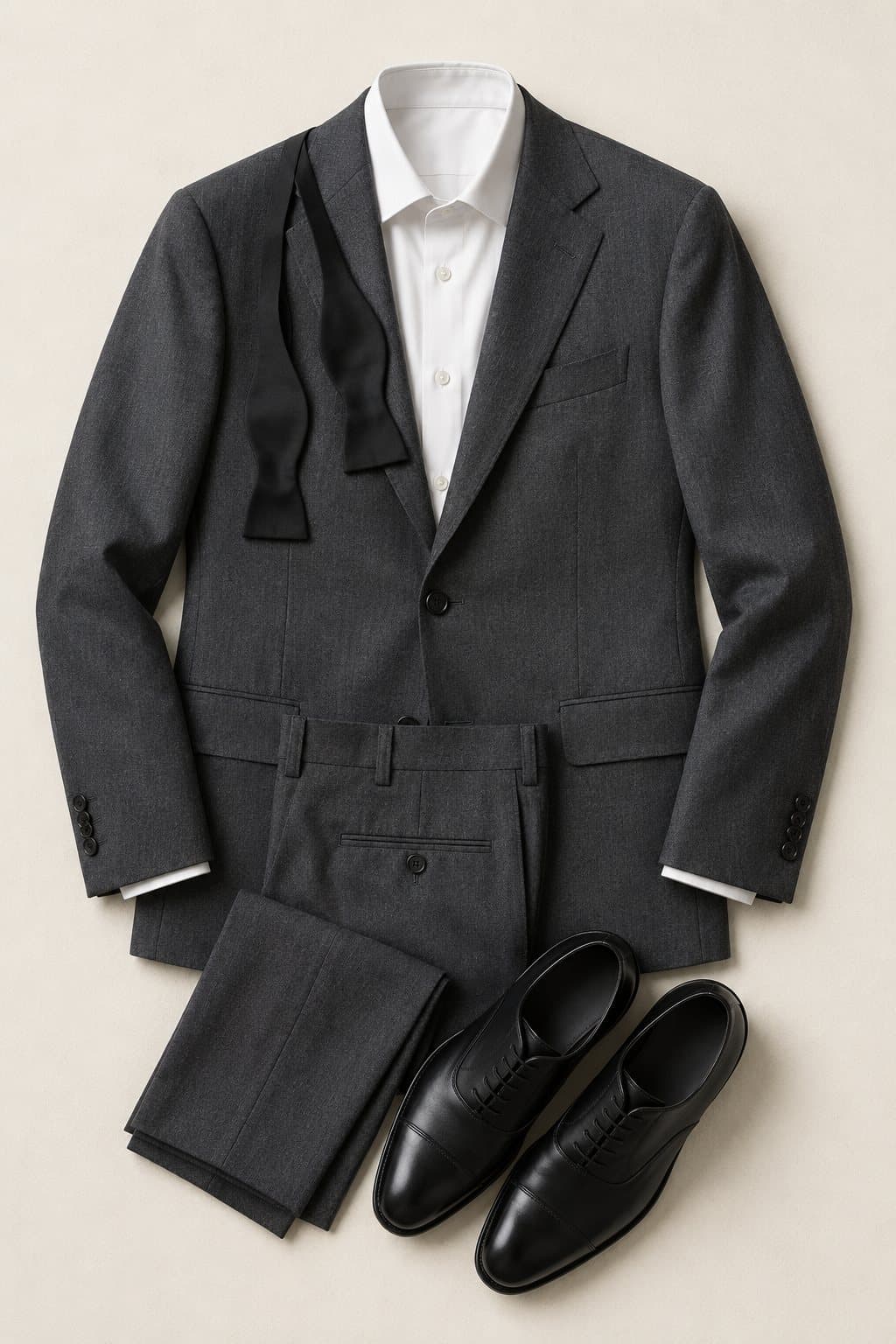
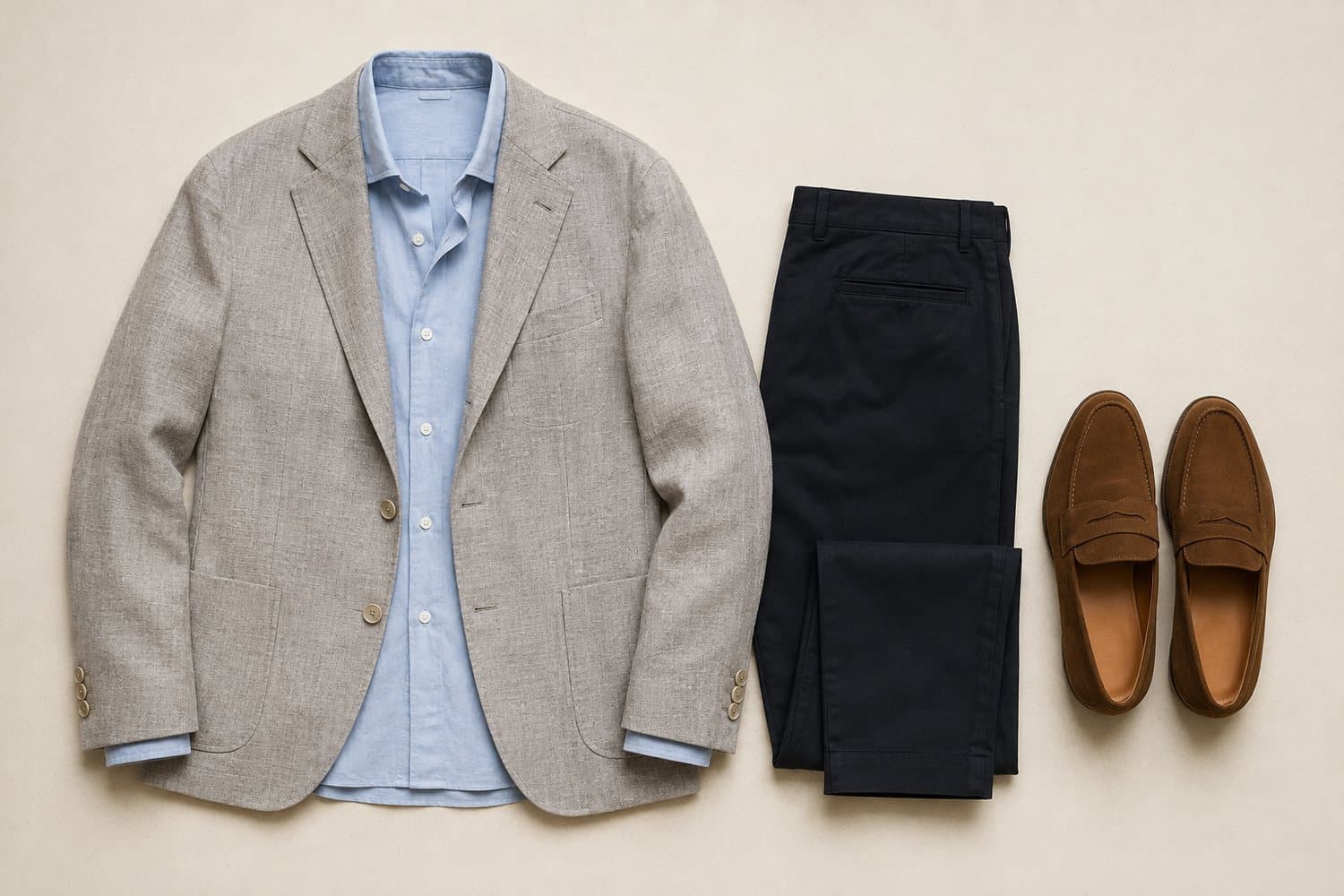
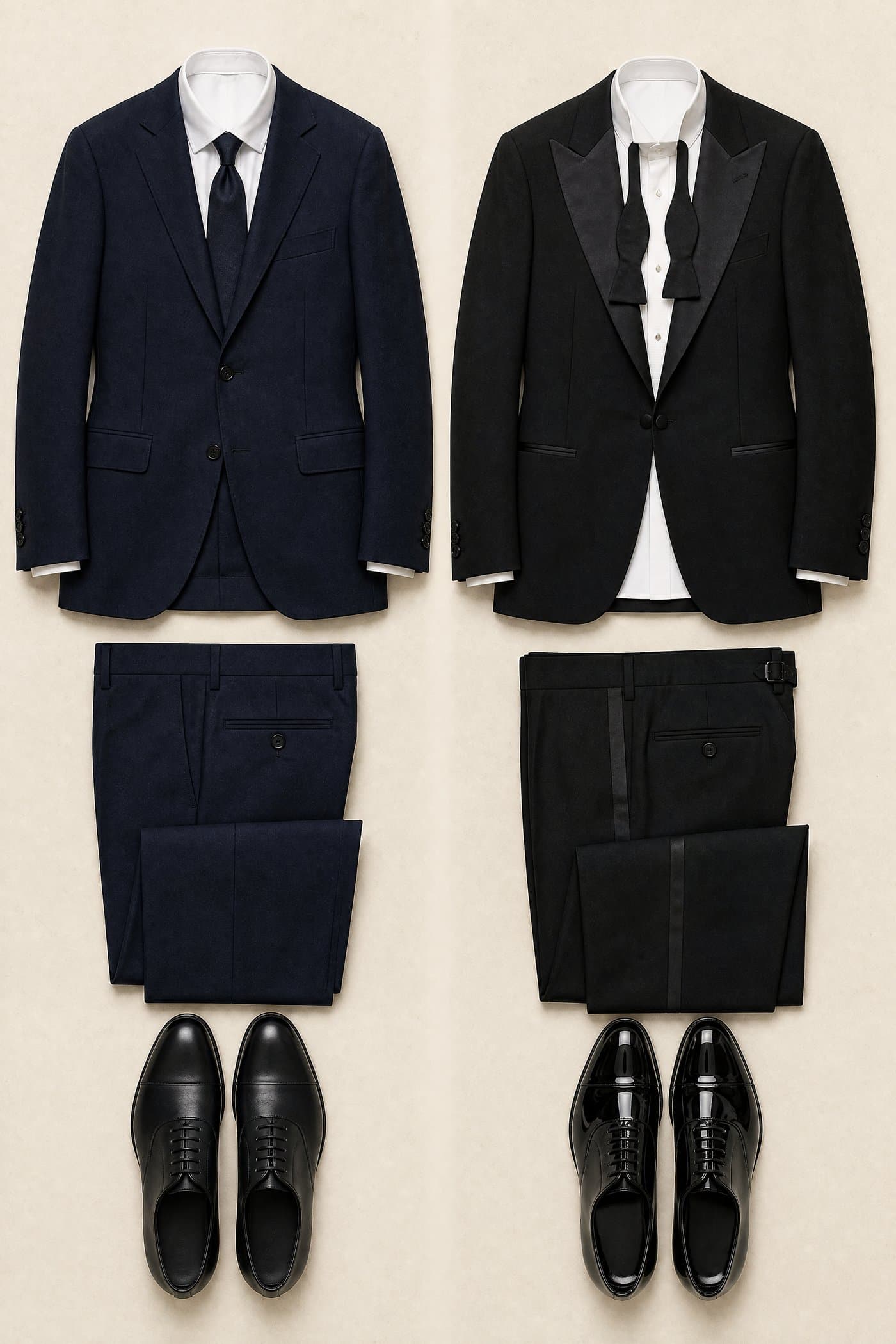
Two complete outfits laid flat side by side on bone paper — one at the lower limit of a formal occasion, one at the upper limit — with no person in the frame.

≥ Floor and ceiling ≤ for one occasion · garments only, never a person

The band moves

Same outfit. Different occasion. Different verdict.

Invitation“Black tie optional. Outdoor ceremony, then dinner inside.”

Too casualToo much

Inside the boundary, at the lower end. Safe. Drag the marker, or focus it and use the arrow keys.

How it works

Three steps, and none of them is a style quiz.

  1. 01

    Paste what the invitation says

    The exact wording, plus the time, the kind of place, and whether you are a guest, working, or family. The wording alone is not enough — a phrase means different things at four in the afternoon and at eight in the evening.

    A printed invitation card lying on bone paper, photographed from directly above.
  2. 02

    Read the band, not the advice

    You get four columns: the floor, the ceiling, the exclusions, and the parts nobody agrees on. Each line says where the limit comes from. Nothing tells you which of the permitted options is better, because that is not a question with an answer.

  3. 03

    Check what you already own

    Photograph an item on its own — the jacket on a hanger, the shoe on the floor — and we say whether it falls inside the boundary or outside it. Photographs containing a person are rejected at upload.

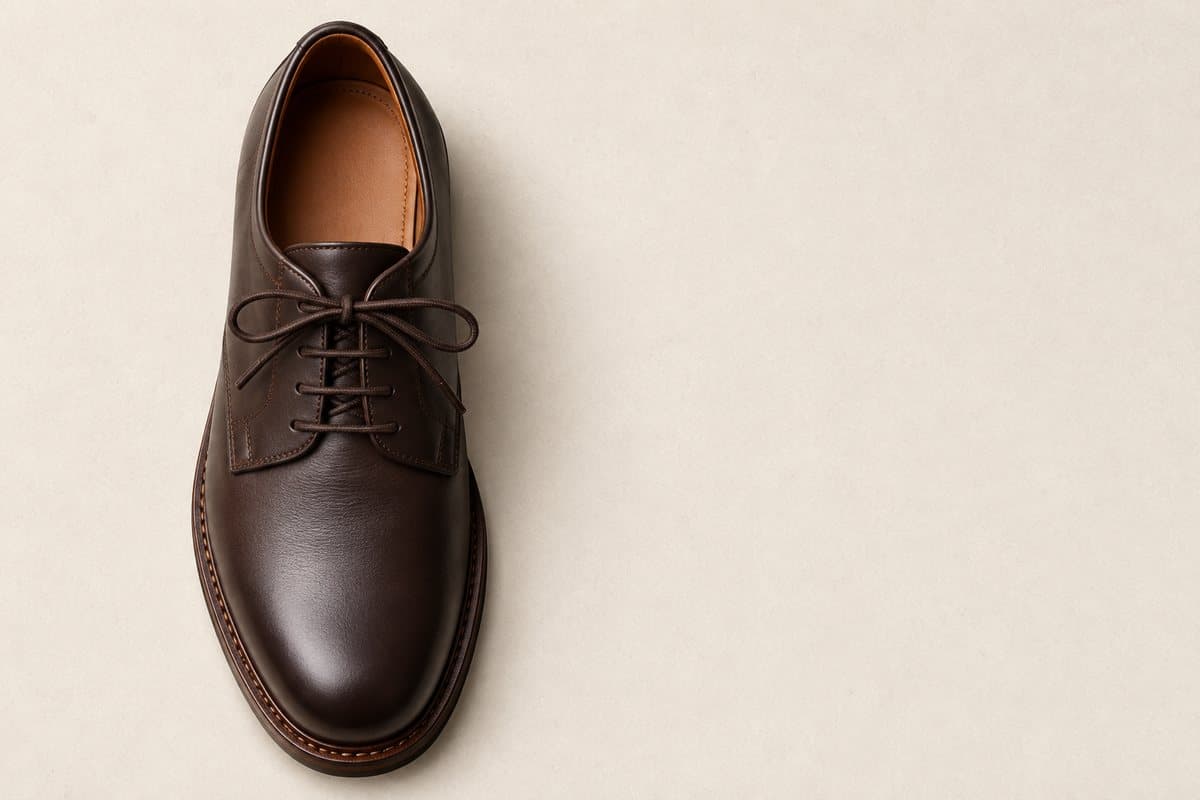
    A single leather derby shoe photographed from above on bone paper, with no person in frame.

The deliverable

The site is the table. Here it is at full size.

Every word on the card is set by the browser, not painted into a picture — so it stays selectable, translatable and printable, and it is never approximately right.

Four worked examples

The never column, turned over

Every exclusion has a source. Turn the card to read it.

A rule you cannot check is just an instruction. Both faces are readable by assistive technology without turning anything.

  • Never · 01

    White, ivory, cream, champagne, or anything that photographs as white

    Where this comes from

    The couple’s own dress is the reference point of the day. Near-whites read as white in photographs, and there is no way to correct it once the album exists.

  • Never · 02

    The colour the wedding party has been assigned

    Where this comes from

    Hosts commonly assign a colour to the people standing at the front. Wearing it from the seats reads as claiming a role that was not given to you.

  • Never · 03

    Trainers, or any shoe that sinks into grass

    Where this comes from

    An outdoor ceremony on turf is a ground condition, not a question of register. It applies whatever the invitation says.

  • Never · 04

    A hat that blocks the row behind you

    Where this comes from

    Seated ceremonies have fixed sightlines. The people behind you cannot move, and will not ask.

Cards we have produced

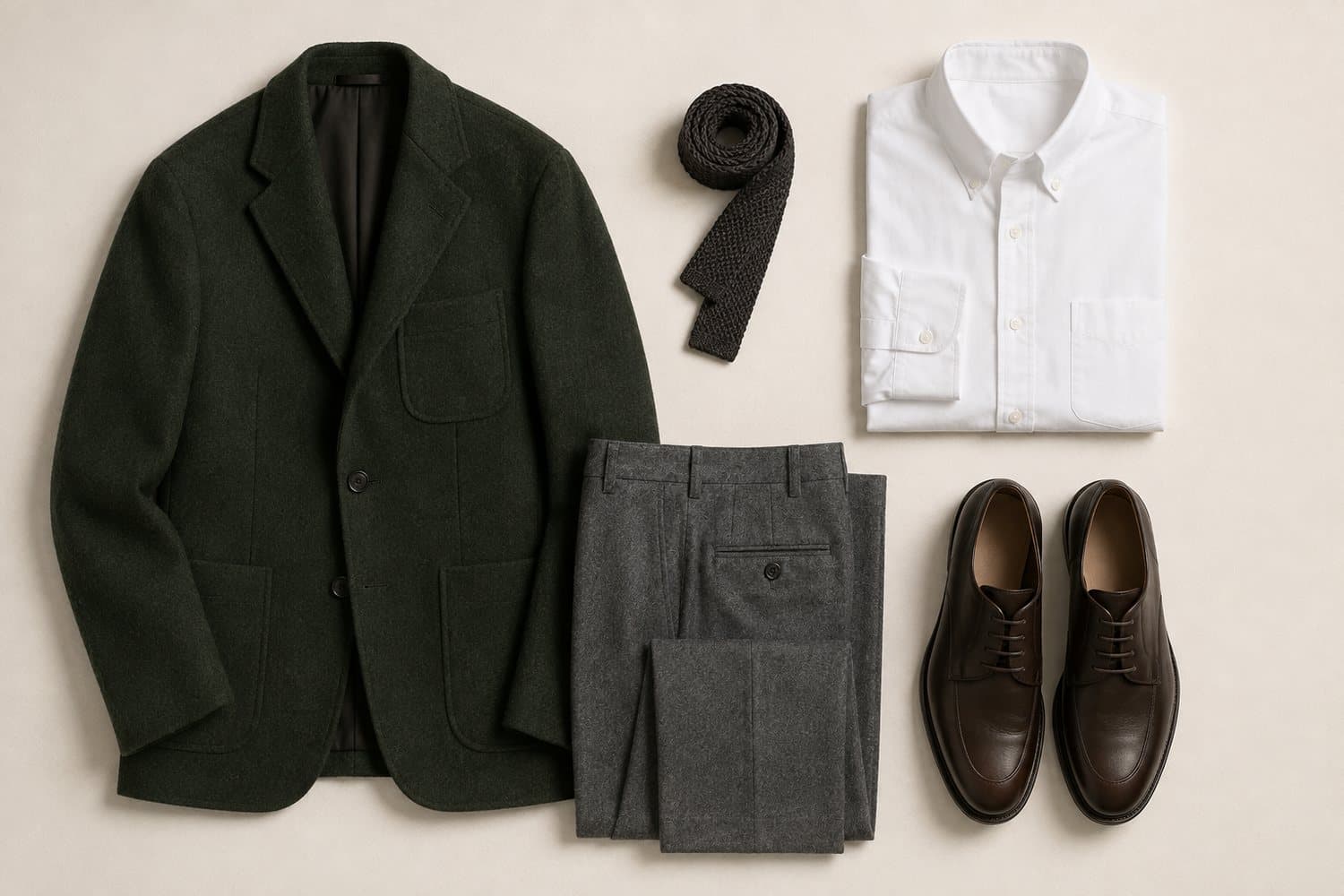
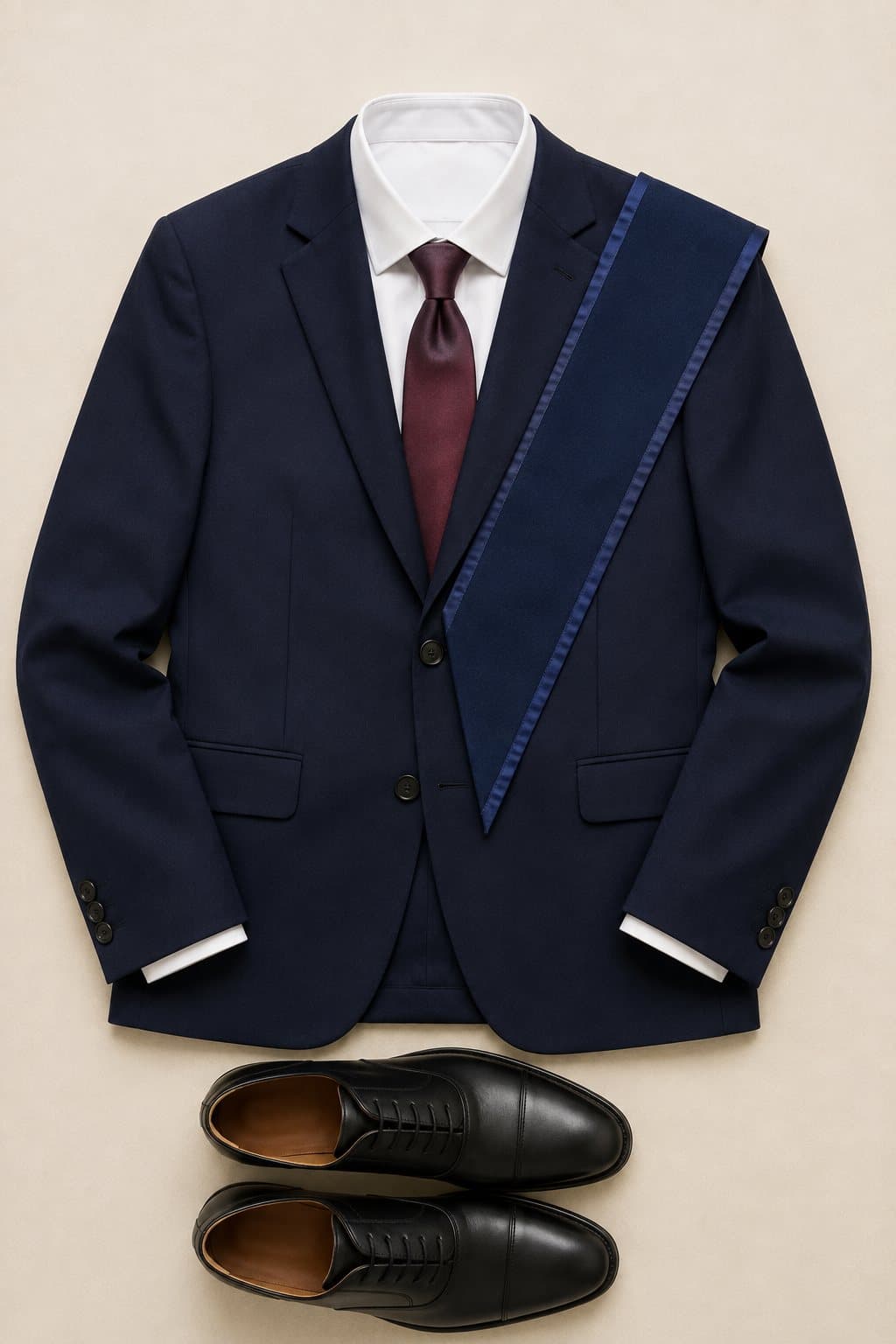
Garments, laid flat. No models, no street shots, no bodies.

Illustrations show what the boundary looks like as objects. A figure in the frame would turn a limit into a judgement about a person.

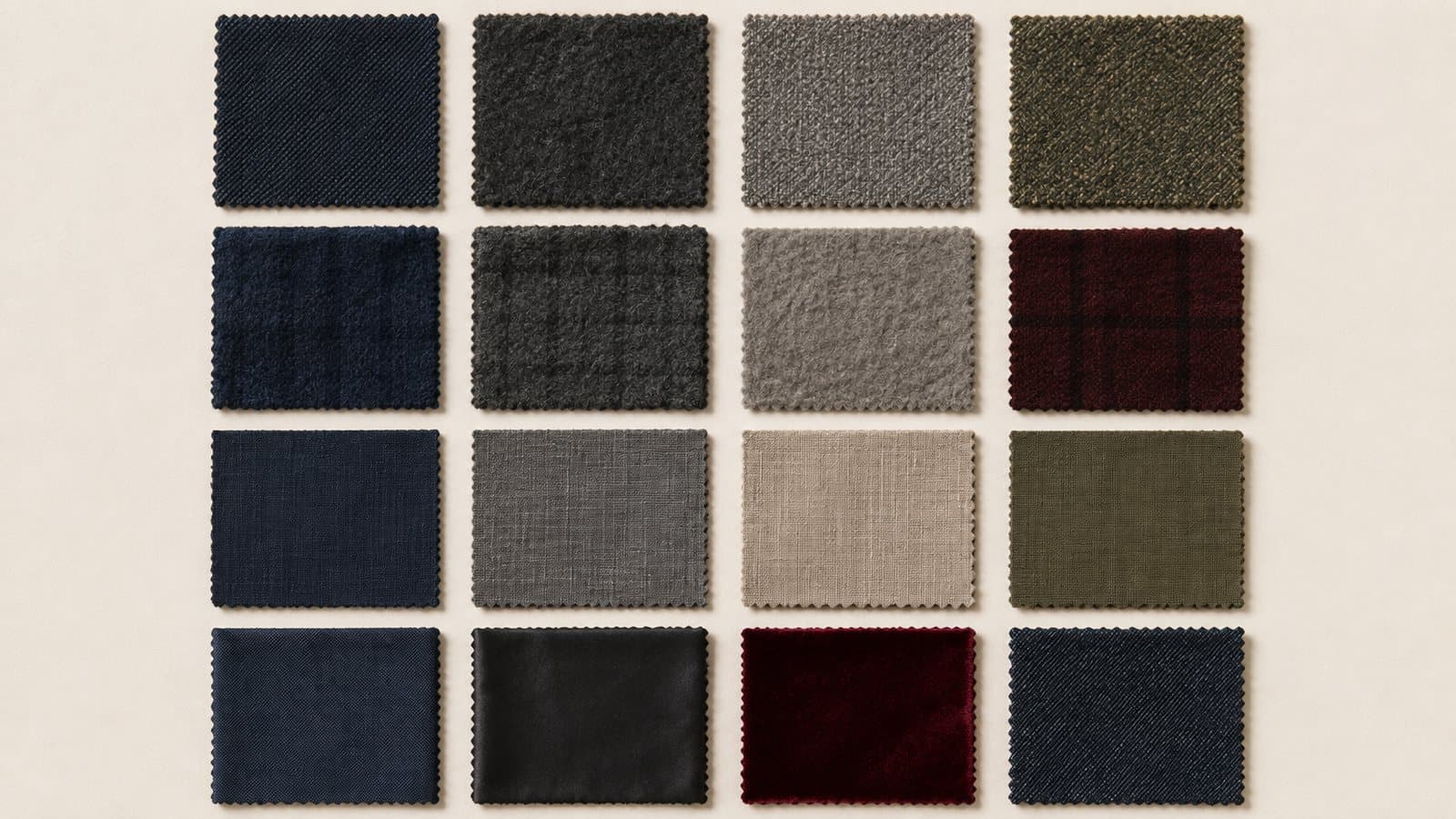
Sixteen square cloth swatches laid out in four rows on bone paper — worsted, flannel, linen, tweed, poplin, silk, velvet and denim.

A boundary is a property of the cloth and the occasion. It is not a property of the person wearing it.

Pricing

Five occasions a month are free.

May – September
Weddings. Often three or four in one summer, and each one different.
November – December
Company parties, then the family ones. Two registers, two weeks apart.
February – April
Awards, ceremonies, graduations. Daytime, seated, photographed.

Five is enough for the invitation that arrived out of nowhere. What you pay for is the season: wedding season, awards season, the run of company parties in December. Occasions arrive in strings, and every one of them has a fixed date you cannot move.

Paying removes the limit on occasions, removes the watermark, adds the print layout, and turns on the single-item check. The watermark never covers the never column at any tier — that column is the reason the card exists.

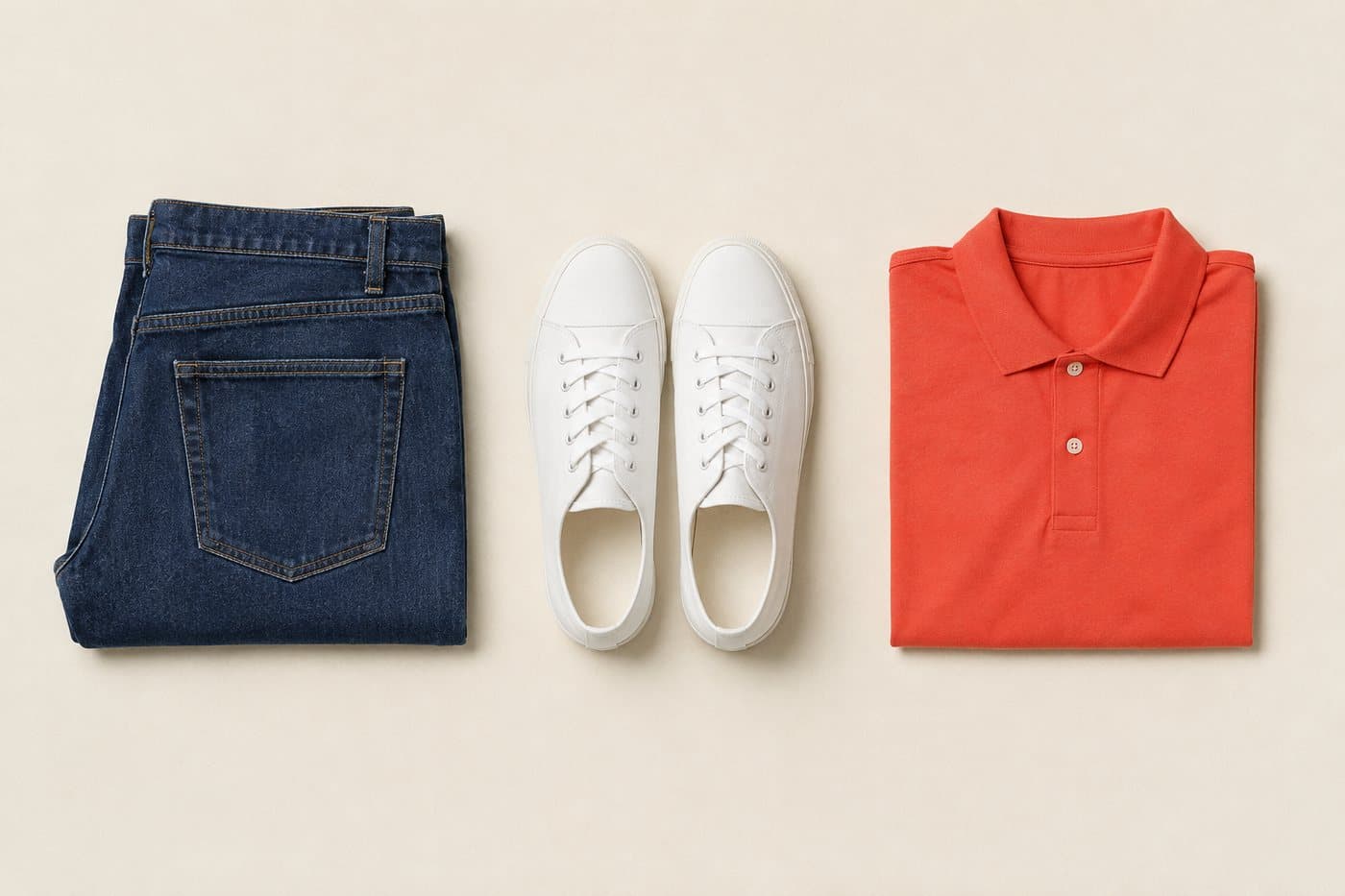
Folded indigo jeans, white canvas trainers and a bright athletic polo shirt laid flat on bone paper as a set of exclusions.
Three items that are never wrong in themselves — and never right in a club dining room in November.

All prices in USD, inkl. MwSt. · no credit packs · no stored value

Free

Enough for the invitation that turned up unexpectedly.

USD 0· always

50 allowance units per month

  • Five occasions per month
  • Full floor, ceiling and never columns
  • Grey areas always shown in full
  • On-screen boundary card
  • Boundary card carries a watermark on screen
  • No print layout
  • No single-item check
Start free

Most chosen

Invite

For a season with more than one date in it.

USD 9per month, inkl. MwSt.

Renews automatically each month until cancelled.

420 allowance units per month

  • Unlimited occasions
  • No watermark
  • Print layout, A4 sheet and wallet card
  • Single-item check against the boundary
  • Boundary cards kept for twelve months
Choose Invite

Formal

For people who are asked to be somewhere most weeks.

USD 26per month, inkl. MwSt.

Renews automatically each month until cancelled.

1600 allowance units per month

  • Everything in Invite
  • Occasion files, kept and re-openable
  • Wardrobe links, so an item is checked once and reused
  • Priority queue
  • Boundary cards kept for thirty-six months
Choose Formal

Full comparison, allowance detail and renewal terms

Questions

Including the two we get asked most.

Two of these answers are a flat no. Both are stated in the first sentence rather than at the end.

01

Will you tell me how to look good?

No. That is a different service and we do not offer it.

Dresscode states the boundaries of an occasion: what would read as under-dressed, what would read as out-ranking the room, and what has no place there at all. Inside those boundaries every choice is yours, and we express no view about which of them is preferable. Nothing on this site rates an outfit’s appearance, and nothing here comments on anyone’s body, shape, size or colouring.

02

Are the rules the same in every country?

No, and any service that tells you otherwise is guessing.

Dress conventions differ by country, by industry, by religion and by generation. The same phrase can mean opposite things in two cities. Because of that, every boundary card carries a Not settled column that lists the points on which practice genuinely differs, and we leave them open instead of picking a side. That column is never empty.

Where an occasion is religious, we draw no conclusion at all about what is required, permitted or removed. We say so, and we point you to the organiser or to someone from that community.

03

Do you use my invitation text or my photographs to train a model?

No. Invitation text and uploaded item photographs are never used to train or fine-tune any model, ours or a third party’s.

An invitation usually contains other people’s names, a date and an address. We treat it as correspondence, not as material. It is processed to answer your question, stored against your account so you can reopen the card, and deleted when you delete the occasion or close the account. Free accounts keep occasions for 30 days, Invite for 12 months, Formal for 36 months, and you can delete any of them at any time from inside the app.

The full detail, including the legal basis and the retention periods, is in the Datenschutz page.

04

How accurate is this, and who is responsible for what I wear?

Dresscode is an artificial-intelligence service. It describes conventions; it does not know your event, your host or the room. Output can be incomplete or wrong, particularly for small communities, private house rules and anything religious.

The final judgement is yours, and we accept no responsibility for the consequences of a clothing choice. The service must not be used for medical, legal, financial, safety, employment, credit, housing or judicial decisions. This is set out in full on the KI-Hinweis page.

05

Can I upload a photograph of myself?

No. Photographs containing an identifiable person are rejected at upload, and nothing we generate contains a human figure.

The single-item check only needs the item: the jacket on a hanger, the shoe on the floor. Illustrations we produce show garments laid flat or hanging, never worn. This is both a product decision — a boundary is a property of the garment and the occasion, not of a person — and a consequence of how seriously German law treats a person’s image.

06

Can I cancel, and what happens to my allowance?

You can cancel at any time from Billing inside the app, in two clicks and without writing to anyone. Cancellation takes effect at the end of the period you have already paid for, and the subscription is not renewed after that.

The monthly allowance is a service allowance, not money. It is not stored value, cannot be redeemed, refunded or transferred, and does not carry over into the next period. There is no top-up pack and no wallet: if you run out before the period ends, the options are to wait for the reset or to move to a higher tier.

07

Can I get my money back?

As a consumer in the EU you have a 14-day right of withdrawal. Because Dresscode is a digital service supplied immediately, that right can expire before the 14 days are up — but only if you have expressly asked us to start at once and acknowledged that you lose the right when we do. Both of those are separate, unticked checkboxes at checkout, and both are repeated in the order confirmation you receive by email.

If you do not tick them, the service starts after the withdrawal period and the right stays intact for the full 14 days. Either way, write to support@anramode.com and we will deal with it. The full text and the model withdrawal form are on the Widerrufsrecht page.

08

Is there an age limit?

Yes. The service is for people aged 16 and over. Accounts for anyone under 16 are not permitted, and where the account holder is a minor under national law, a parent or guardian must enter into the contract. Payment details must belong to the account holder or to that guardian.

One field. No account needed to start.

Read what the invitation actually requires.